Why You're Not Winning After the Interview

How to turn interview presentations into winning client conversations.

Enarche blog

If you're like most architecture, engineering, or design firms, you probably prepare for interviews believing you're trying to answer one question: Can we prove we're the most qualified team?

It's a reasonable assumption. After all, qualifications are what get you shortlisted in the first place.

But after years of helping A/E firms pursue work and hearing from the people responsible for selecting them, we’ve learned something interesting. By the time a client invites you to interview, they're trying to answer a different question entirely.

Most firm leaders and project managers walk into an interview trying to prove they're qualified. Clients walk into the interview trying to decide whether they can envision working alongside your team throughout the life of the project.

Recognizing that difference changes how firms should prepare for interviews. Instead of focusing solely on what they want to communicate, they need to consider what the client is still trying to understand.


Going beyond credentials

If you see the interview as a way of proving your experience, it's only natural to prepare by showcasing as many qualifications as possible. We’ve seen firms spend hours refining project examples, compiling project stats, rehearsing team introductions, perfecting slide decks, and making sure every credential is represented. Their assumption is straightforward: the more evidence I provide, the stronger my case becomes.

That way of thinking makes sense, but it overlooks an important point.

By the time a client invites your firm to interview, they've already reviewed your experience, your project examples, and your technical approach. If you've made the shortlist, they've determined your team is capable of doing the work.

Qualifications still matter. They're what earned you the interview. But once you're in the room, simply repeating what the client has already seen doesn't move the conversation forward. It takes valuable time away from addressing the questions they're still trying to answer. And the interview is where projects are won or lost.

By the time you've earned the interview, clients are no longer deciding whether you can do the work.
They're deciding whether they want to do the work with you.


Reading the room

During interviews, decision-makers aren’t searching for another project example or another list of credentials. They’re trying to understand what it feels like to work with your team. That includes something that's difficult to quantify but easy to recognize: chemistry.

  •       Will you communicate clearly when priorities change?
  •       Do you genuinely understand the project's goals, challenges, and stakeholders’ needs?
  •       Will you collaborate well with the different project teams?
  •       Will you respond thoughtfully when faced with difficult questions?
  •       Can you be trusted when the project becomes more complicated than expected?
  •       Will this be the team I can have difficult conversations with when challenges arise?
  •       Am I going to look forward to working with this team?

These aren't questions about your past projects. They're questions about your future working relationship. The interview becomes one of the first opportunities for clients to experience how your team thinks, communicates, collaborates, and responds under pressure.

That's because the interview is less about validating your capabilities and more about beginning to build trust. And the interesting thing about trust is that clients rarely evaluate it directly; instead, they look for signs of it during conversations.

  •       Does your team communicate well?
  •       Do you understand their priorities and concerns?
  •       Do the people in the room work well together?
  •       Does your team know how to pivot when the conversation goes off script?

The interviews that end in selection are the ones where the conversation was engaging and moved beyond the presentation itself. In those moments, clients begin to answer the question that matters most: not whether you're qualified, but whether you're the team they trust to have beside them as the work unfolds.

HOw storytelling builds trust

So how do you help a client begin to trust you?

You help them understand how your team thinks, how you approach challenges, and how you'll show up when the path forward isn't straightforward.

That's why storytelling plays such an important role in business development today.

A well-told story reveals far more than the outcome of a project. It shows how your team helped a client navigate a difficult decision, align competing priorities, adapt when conditions changed, or move forward when there wasn't an obvious path ahead.

Great Stories Don't Happen by Accident

The firms with the strongest interviews don't invent stories the night before a presentation. They build a repeatable approach to uncovering, refining, and sharing them across their entire team.

That's exactly what our Storytelling Workshop is designed to do. We work directly with A/E firms to help their teams identify the stories that build confidence long before interview day.

Learn How It Works

Imagine two firms responding to the same interview question: "How would your team approach a project like ours?"

One answers by sharing their technical approach, listing relevant projects, and years of similar experience.

The other passionately shares a story about a project where stakeholder priorities threatened to derail progress. Instead of focusing solely on the credentials, they tell a client-centric story that explains how the team navigated competing perspectives, adapted their approach, and helped the client move forward with confidence.

The first proves they have experience. The second gives the client confidence in how that experience will be applied.

That's why storytelling is much more than a presentation technique. It's a way to transform qualifications into confidence.


While technical information earns credibility, storytelling earns confidence.

A different way to think about interviews

Qualifications remain essential. They always will. Without them, you probably won't make the shortlist. But once you've earned the interview, the conversation needs to shift.

The goal is no longer to convince the client that you're capable of doing the work. It's to help them feel confident that you're the right team to navigate everything that comes with it.

Instead of asking, "How do we prove we're qualified?" ask, "How do we help the client envision working with us?"

Instead of repeating what you've done, show them how you think. Instead of treating the interview as a presentation, treat it as the beginning of a relationship.

Remember, qualifications may earn you the opportunity, but trust earns you the work.

If your team is ready to move beyond qualifications and build a more intentional approach to storytelling, we'd love to help.

Authored by

Katelyn Litalien

Co-Founder & COO

Join Our Mailing List

Join Our Mailing List


more stories
The Missing Force behind A/E Growth Strategies

The Missing Force behind A/E Growth Strategies

If your firm is doing more to grow but seeing diminishing returns, brand may be the missing lever. Learn why growth feels harder than it should for A/E firms and how intentional branding reduces the cost of long-term growth by shifting from reactive to proactive demand.

Stop Playing It Safe: Why A/E Firms Must Differentiate to Compete

Stop Playing It Safe: Why A/E Firms Must Differentiate to Compete

Many A/E firms lose work not because of a lack of expertise, but because they look and sound like everyone else. This article explores the hidden cost of playing it safe, what other industries do differently, and how clearer differentiation makes client decisions easier and win rates stronger.

Compete like a Giant: A Leadership Playbook for A/E Firms

Compete like a Giant: A Leadership Playbook for A/E Firms

What separates the firms that grow despite unpredictable conditions, and the ones that get stuck? Intentional action. This playbook breaks down the four pillars that help A/E firms compete like giants and the key things leaders should prioritze this year.

Small Moves, Big Momentum.

Small Moves, Big Momentum.

In the AEC industry, sustainable growth isn’t driven by big moves alone — it’s shaped by clarity, leadership, and consistent strategic action. This year-end reflection explores how small, intentional decisions create lasting momentum for firms navigating shifting market demands. Discover the three leadership disciplines every firm needs heading into the new year.

The Hidden Drivers Behind Why Clients Choose You

The Hidden Drivers Behind Why Clients Choose You

Most A/E firms focus on what they did instead of why it mattered. This article explores how understanding and communicating the true value of your work—increasing revenue, decreasing cost, and mitigating risk—can transform your storytelling, strengthen client connections, and position your firm as a trusted advisor rather than a service provider.

Beyond the Portfolio: How Gensler's Website Signals a Shift in A/E Marketing

Beyond the Portfolio: How Gensler's Website Signals a Shift in A/E Marketing

Your website should be more than a gallery. Explore how top A/E firms are turning their sites into strategic business development tools that clarify value and convert opportunities.

Smarter A/E Business Development Starts with the Right Tech Stack

Smarter A/E Business Development Starts with the Right Tech Stack

Discover the best BD tech tools for architecture & engineering firms. Streamline workflows, win more work, and download our free comparison guide.

The Hidden Inefficiencies Holding Your A/E Firm Back

The Hidden Inefficiencies Holding Your A/E Firm Back

Struggling to improve your A/E firm's marketing and BD performance? Learn the 5 most common inefficiencies holding your firm back – and how to fix them to increase visibility, streamline operations, and win better work.

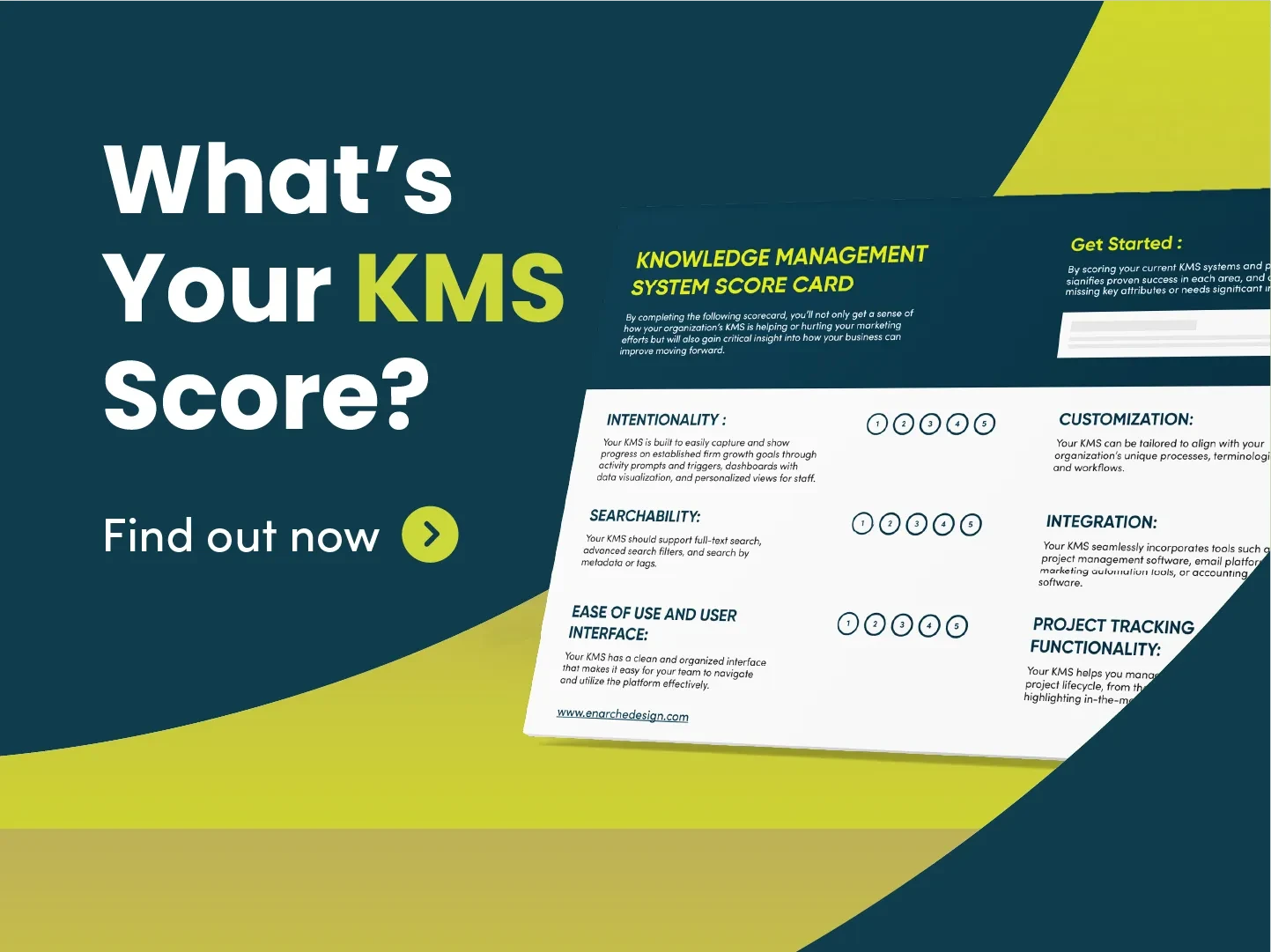
The 3 Mistakes Your Firm is Making...

The 3 Mistakes Your Firm is Making...

Too often, A/E firms waste time searching for vital information, fail to verify if that information is accurate, or worse, operate within isolated ecosystems, redundantly storing data. These threats to your success are the direct result of three common mistakes...

Designing with Purpose

Designing with Purpose

In the evolving world of architecture and design, the ability to challenge conventions and drive innovation with a clear purpose is essential—and frankly, slow in comparison to other markets. Leslie Chiu, with her extensive background in design and her tenure at WeWork, exemplifies how visionary leadership can reshape the landscape of workplace design. 

What A/E Firms Should Learn From Stanley

What A/E Firms Should Learn From Stanley

Stanley was a brand best associated with gruff construction workers or professionals looking to keep their coffee warm during a busy commute to work. So how is it that this same company is now associated with TikTok, influencer culture, and fashion? Keep reading to find out!

Southern A/E Boom? Capitalizing on the Financial Firm Exodus

Southern A/E Boom? Capitalizing on the Financial Firm Exodus

In a shift that has reshaped the business landscape, the migration of financial firms from Northeast and West Coast capitals has created a rift in the financial industry's geographic footprint.

How Shelli Decker is Shaping A/E Marketing through Storytelling

How Shelli Decker is Shaping A/E Marketing through Storytelling

In the world of architecture and engineering (A/E), where innovation meets precision, marketing often finds itself at a crossroads.

The Future of A/E Marketing

The Future of A/E Marketing

Your designs transform culture, revitalize neighborhoods, and create environments where people can thrive, but does your marketing match this impact?