The Missing Force behind A/E Growth Strategies

How to reduce the cost of long-term growth through intentional branding.

Enarche blog

WHY GROWTH FEELS HARDER THAN IT SHOULD

If you lead an architecture, engineering, or design firm, you’ve likely asked yourself the question, “Why does growth feel harder than it should?”

Your people are strong.
Your work is competitive.
And you are investing time, energy, and resources into business development.

Yet every year, it seems to take more effort to win the same amount of work. More pursuits, more persuasion, and more pressure on BD and marketing teams just to keep pace.

This isn’t a coincidence. And it isn’t just the market.

It’s an indicator that your firm is likely operating in a permanently responsive state, and responsiveness is expensive.

When growth relies on reacting, it will always cost more than it should.


A REACTIVE GROWTH MODEL

Most A/E firms are built to respond.

Respond to RFPs.
Respond to client demands.
Respond to market shifts, staffing needs, and competitive pressure.

In this model, growth depends heavily on short-term activation: pursuits, proposals, presentations, and relationships. These efforts are necessary, but when they become the primary growth engine, everything happens late in the decision cycle—once an opportunity is already in motion rather than shaping demand upstream.

By the time your firm shows up, clients are already forming preferences, fee pressure is already present, and differentiation has to be explained instead of recognized. Business development feels harder than it should because you’re constantly trying to influence decisions after they’ve begun.

What’s missing isn’t more activity; it’s a shared foundation that guides how you make decisions, communicate value, and show up in the market.

In many firms, brand has been relegated to something to execute rather than treated as a strategic anchor for decision-making across the organization. Marketing and BD teams are asked to drive growth, but without a clear growth strategy, shared language, or leadership alignment, they’re left responding to requests instead of shaping direction.


The result is a reactive cycle. Marketing produces what’s needed for the next pursuit. BD adapts messaging on the fly. Teams across the firm are left to interpret who the firm is, often with differing perspectives. Over time, this constant adaptation waters down the brand, leaving clients and teams with an increasingly blurry understanding of what the firm actually stands for.

This is where brand becomes an executive concern rather than a marketing function. Not because marketing shouldn’t have a voice in it (they absolutely should!), but because brand operates at the firmwide level—shaping decisions, alignment, and direction. Without that clarity, growth remains reactive rather than proactive..

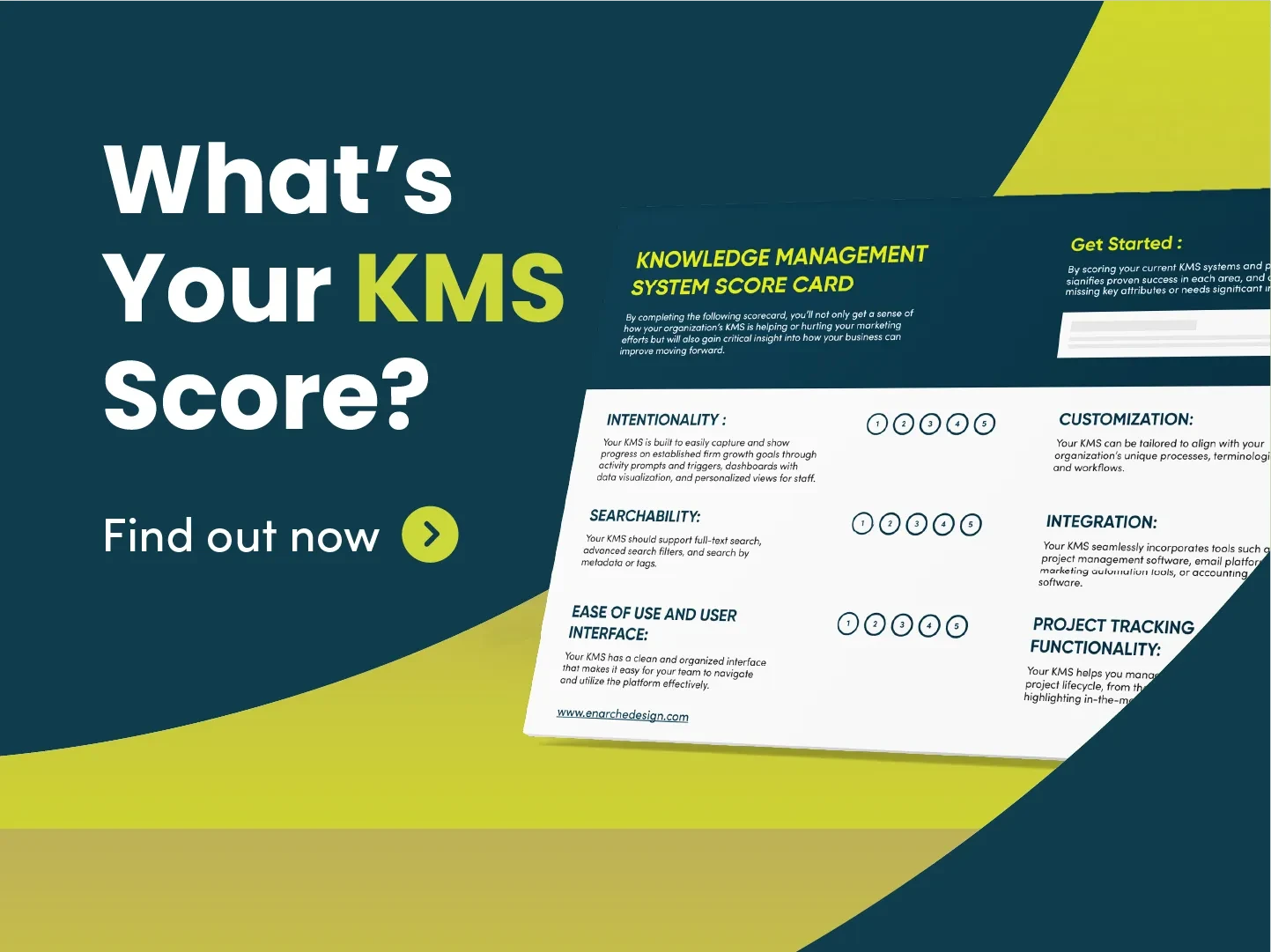
Want to understand where brand alignment is breaking down?

We’ve created a practical resource that walks you through the foundational elements of a strong A/E brand.


BRAND AS THE LONG-TERM FORCE BEHIND GROWTH

Brand is often misunderstood in the built environment industry. It’s typically seen as the logo, color palette, or fonts used in a proposal or website. But its role is far more strategic.

Brand is the perception of who you are, what you stand for, and the unique value you provide internally (to your talent) and externally (to your clients). A well-articulated brand is the rallying cry that makes people want to work with and for you. And when done well, it reduces the cost of growth over time.

When brand functions as a growth lever, it does work before a pursuit begins. It shapes how your firm is perceived when you’re not in the room. It builds familiarity and confidence ahead of need and makes growth less dependent on late-stage persuasion.

This distinction is well documented in research. In "The Long and the Short of It" and later in "Media in Focus," Les Binet and Peter Field show that brand-building and sales activation operate on different timescales. Short-term activation drives immediate spikes in response, while brand-building compounds over time — steadily increasing baseline demand, preference, and mental availability. This matters even more in industries with long sales cycles, like architecture, engineering, and construction.
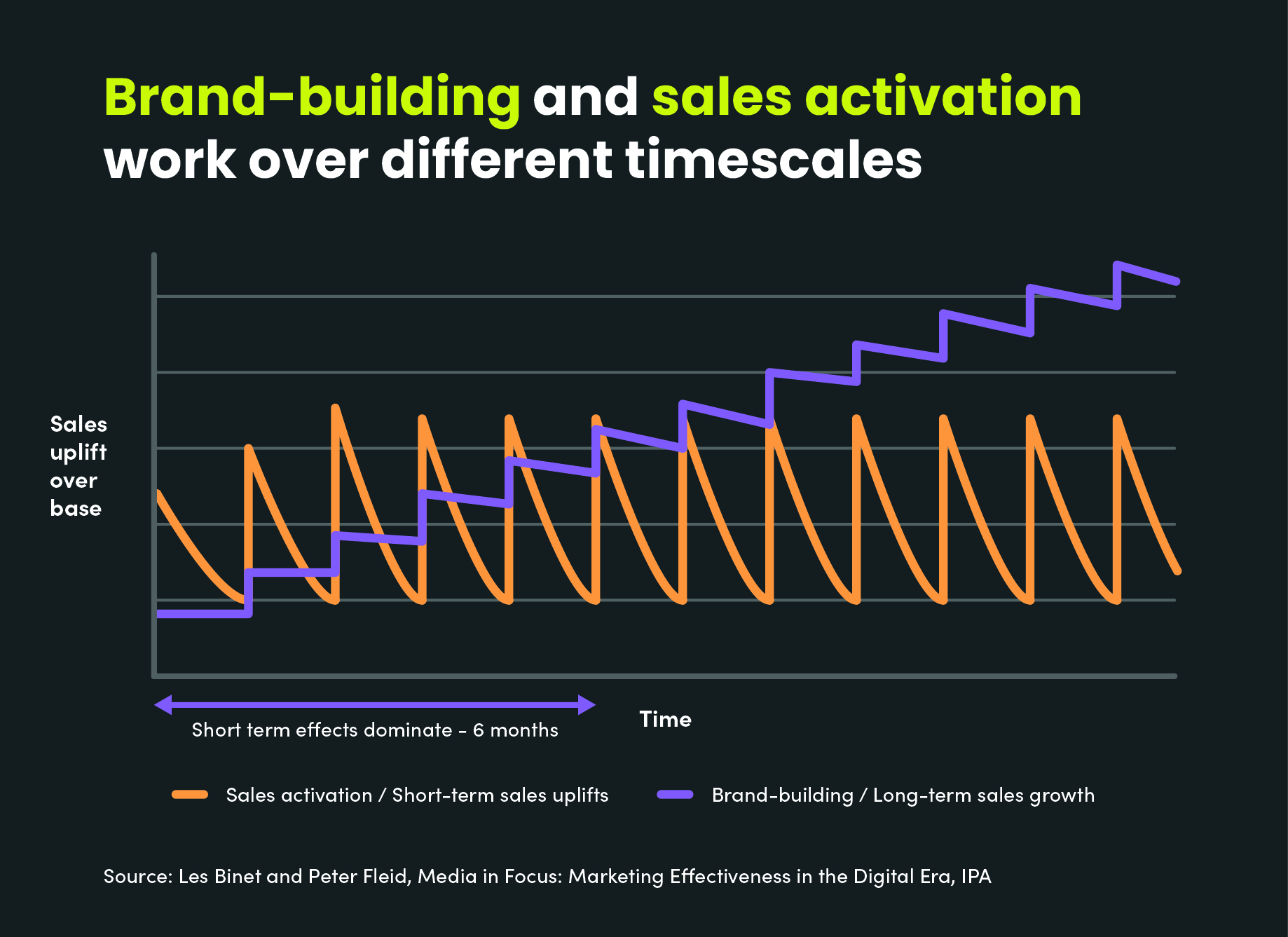


Firms that rely primarily on short-term activation must continually spend more time and energy to stay competitive. Those that invest in brand create long-term advantages, making future growth more efficient, stable, and defensible.

In other words,

 AE firms that invest in brand are not chasing demand; they are creating it.


STRATEGIC BRANDING IN ACTION

When brand is working, growth starts to feel different.

Clarity replaces improvisation. Firm leaders, BD teams, and marketers can consistently articulate who you are, what you do best, and why it matters. There’s no internal contradiction and no reliance on individual rainmakers to define the story.

Persuasion gives way to confidence. Clients arrive with context. Conversations shift from “convince me” to “confirm fit.” Fee discussions become easier because value is already understood. The firm is known—not just visible. And growth stabilizes over time.

I’ve worked with firms that struggled to articulate what their brand stood for. Each person had a different answer or none at all.

That lack of clarity showed up everywhere: market confusion, BD inefficiency, and leadership frustration.

But once we defined and articulated their service offerings, value, and differentiation, the firm didn’t just “sound better.” They aligned internally, BD conversations became more effective, marketing became more focused, and growth became less effort-intensive because everyone was working from the same foundation.

I’ve also seen what happens when firms focus on brand early and intentionally. One engineering firm I worked with made that investment and experienced rapid growth in the first few years, followed by sustained scale. Over time, that strategic focus supported not just revenue growth, but enterprise value—ultimately resulting in a sale at roughly double the firm’s original valuation.

The common thread wasn’t marketing activity.

It was a long-term brand strategy that started at the executive level.

A LEADERSHIP QUESTION WORTH ASKING

When growth feels reactive or more difficult than it should, the question isn’t whether you’re doing enough.

It’s whether your brand is doing any work at all.

Not as a logo.
Not as a tagline.
But as a system that reduces friction, builds confidence, and supports long-term growth.

If you’re a firm leader who wants to understand whether your brand is helping or hindering growth, this is a conversation worth having. 

Book a free 30-minute consultation to explore how brand could better support your strategy.


Authored by

Dez Joslin

Founder & CEO

Join Our Mailing List

Join Our Mailing List


more stories
Small Moves, Big Momentum.

Small Moves, Big Momentum.

In the AEC industry, sustainable growth isn’t driven by big moves alone — it’s shaped by clarity, leadership, and consistent strategic action. This year-end reflection explores how small, intentional decisions create lasting momentum for firms navigating shifting market demands. Discover the three leadership disciplines every firm needs heading into the new year.

The Hidden Drivers Behind Why Clients Choose You

The Hidden Drivers Behind Why Clients Choose You

Most A/E firms focus on what they did instead of why it mattered. This article explores how understanding and communicating the true value of your work—increasing revenue, decreasing cost, and mitigating risk—can transform your storytelling, strengthen client connections, and position your firm as a trusted advisor rather than a service provider.

Beyond the Portfolio: How Gensler's Website Signals a Shift in A/E Marketing

Beyond the Portfolio: How Gensler's Website Signals a Shift in A/E Marketing

Your website should be more than a gallery. Explore how top A/E firms are turning their sites into strategic business development tools that clarify value and convert opportunities.

Smarter A/E Business Development Starts with the Right Tech Stack

Smarter A/E Business Development Starts with the Right Tech Stack

Discover the best BD tech tools for architecture & engineering firms. Streamline workflows, win more work, and download our free comparison guide.

The Hidden Inefficiencies Holding Your A/E Firm Back

The Hidden Inefficiencies Holding Your A/E Firm Back

Struggling to improve your A/E firm's marketing and BD performance? Learn the 5 most common inefficiencies holding your firm back – and how to fix them to increase visibility, streamline operations, and win better work.

The 3 Mistakes Your Firm is Making...

The 3 Mistakes Your Firm is Making...

Too often, A/E firms waste time searching for vital information, fail to verify if that information is accurate, or worse, operate within isolated ecosystems, redundantly storing data. These threats to your success are the direct result of three common mistakes...

Designing with Purpose

Designing with Purpose

In the evolving world of architecture and design, the ability to challenge conventions and drive innovation with a clear purpose is essential—and frankly, slow in comparison to other markets. Leslie Chiu, with her extensive background in design and her tenure at WeWork, exemplifies how visionary leadership can reshape the landscape of workplace design. 

What A/E Firms Should Learn From Stanley

What A/E Firms Should Learn From Stanley

Stanley was a brand best associated with gruff construction workers or professionals looking to keep their coffee warm during a busy commute to work. So how is it that this same company is now associated with TikTok, influencer culture, and fashion? Keep reading to find out!

Southern A/E Boom? Capitalizing on the Financial Firm Exodus

Southern A/E Boom? Capitalizing on the Financial Firm Exodus

In a shift that has reshaped the business landscape, the migration of financial firms from Northeast and West Coast capitals has created a rift in the financial industry's geographic footprint.

How Shelli Decker is Shaping A/E Marketing through Storytelling

How Shelli Decker is Shaping A/E Marketing through Storytelling

In the world of architecture and engineering (A/E), where innovation meets precision, marketing often finds itself at a crossroads.

The Future of A/E Marketing

The Future of A/E Marketing

Your designs transform culture, revitalize neighborhoods, and create environments where people can thrive, but does your marketing match this impact?